
Tacoma sits right on Puget Sound, and that location shapes nearly everything about how a vehicle ages here. The near constant rain that defines a Pacific Northwest year combines with genuine salt air drifting off the Sound, while the city’s steep hills, the kind found climbing up from the waterfront into the North End or through the Stadium District, add their own demanding terrain into the mix. Few cities combine wet climate corrosion, coastal salt exposure, and genuinely hilly streets in quite the same way, and understanding how these three factors work together helps Tacoma drivers stay ahead of problems that a drier or flatter city would never produce.
Why Tacoma’s Combination Of Rain And Salt Is Genuinely Different
Rust forms when iron or steel is exposed to moisture and oxygen, and Tacoma offers both in abundance for much of the year. Unlike an inland city that deals with rain alone, Tacoma’s position on Puget Sound means salt laden air reaches vehicles throughout the city, not just those parked immediately along the water. This salt exposure combined with near constant rain creates a corrosion environment considerably more aggressive than either factor would produce on its own, since salt residue combined with persistent moisture accelerates the oxidation process well beyond what plain rainwater alone would cause.
Where This Combination Causes The Most Damage
The undercarriage bears the brunt of this exposure, since it sits closest to the road and collects the most direct contact with salt laden moisture without ever being visible during a routine glance at the vehicle. Frame rails, brake lines, exhaust systems, and suspension components are all vulnerable, and brake lines deserve particular attention since these steel components carry fluid under pressure, meaning corrosion here can eventually compromise safety rather than just appearance.
Beyond the undercarriage, Tacoma’s rain affects brake rotors specifically in a way worth understanding on its own. Rotors are iron, and constant dampness promotes a light surface rust that forms whenever a vehicle sits for a while between drives, requiring the brake pad to wear through this rust layer before achieving full clean contact again. This cycle repeats constantly through a wet Tacoma winter, contributing to somewhat faster pad wear than the same braking habits would cause in a drier climate.
How Tacoma’s Hills Compound Both Of These Challenges
Steep descents, like those found dropping from the North End down toward the waterfront or through other hillside neighborhoods, demand continuous or repeated braking to control speed against gravity, generating considerably more heat than the shorter, intermittent braking typical of flat road driving. When this hill related braking demand combines with the surface rust cycle that Tacoma’s rain already creates, brakes here face a genuinely compounded challenge, generating heat from the terrain while also working through rust formed during the rain soaked periods between drives.
This same terrain adds wear to suspension components as well, since constant elevation change asks struts and shocks to manage weight transfer more frequently than flatter city streets would require, and this mechanical wear happens on top of whatever corrosion the salt and rain combination is already causing to the same components.
Signs This Combination Is Affecting Your Vehicle
A grinding or scraping sound during the first brake application after the car has sat for a while, which then smooths out after a few applications, reflects the surface rust cycle common to Tacoma’s climate. A burning smell after a steep descent, or a brake pedal that feels softer than usual, suggests the added heat from hill driving has pushed brakes harder than routine city driving would. Visible corrosion around wheel wells, a spongy brake pedal suggesting a corroded line, or a car that has become harder to start due to corroded electrical connections are all worth investigating as well. If you have dealt with a starting issue, our guide on the top 10 reasons your car won’t start and how to get back on the road covers a range of causes, several of which trace back to this kind of combined wet climate and salt exposure.
Why Tacoma Drivers Should Check These Systems More Often
Standard maintenance intervals do not account for a city that combines rain, salt air, and steep terrain into a single climate profile. Tacoma drivers benefit from having brakes checked every six months rather than annually, along with periodic undercarriage inspections for early corrosion, particularly for anyone whose regular routes include the city’s steeper hillside streets. This adjustment matters more here than a generic maintenance guideline built for a flatter, drier city would ever suggest.
Simple Habits That Help Slow The Damage
Washing your vehicle regularly, including a deliberate undercarriage rinse, helps remove accumulated salt residue before it has extended time to sit and cause damage. Applying a rust inhibiting treatment to exposed undercarriage components on a regular schedule adds meaningful protection, and using a lower gear during steep descents, when your vehicle allows for it, uses engine braking to reduce some of the heat buildup that would otherwise fall entirely on your brake pads.
Applying light, gentle brake pressure a few times shortly after starting a drive, particularly after the car has sat for a while during a wet stretch, helps clear surface rust from the rotors in a controlled way rather than during a moment when full stopping power might be needed unexpectedly on one of Tacoma’s steeper streets. This is a small habit, but one that pairs well with the other precautions given how directly Tacoma’s rain and hills compound against each other through the braking system specifically.
Why A Mobile Mechanic Fits Tacoma’s Combined Challenges
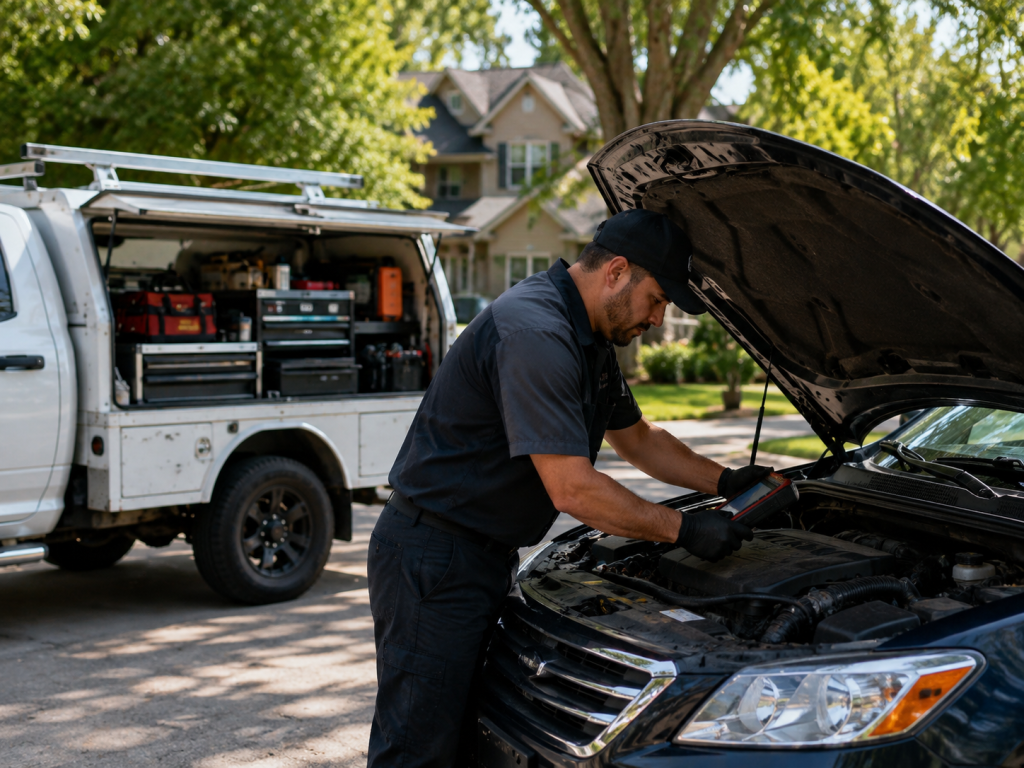
Given how these separate stresses affect different systems throughout a vehicle, having a technician familiar with Tacoma’s specific combination of climate and terrain come directly to your home or workplace offers a real advantage. A mobile mechanic can inspect undercarriage components, brakes, and suspension together in one visit, addressing the full range of wear this environment causes.
We covered the broader benefits of this approach in our article on why mobile mechanics are better than traditional auto shops in Tacoma, which explains how convenience and local familiarity come together, particularly useful for the kind of comprehensive maintenance Tacoma’s climate and terrain genuinely require.
Protect Your Vehicle From All Three Of Tacoma’s Challenges
Tacoma’s rain, salt air, and steep hills are all simply part of life here, and while none of them can be avoided, staying ahead of how they combine against your vehicle is well within your control. Catching corrosion and brake wear early can add years to the life of components that would otherwise wear out well before their time in this environment, whether your daily driving stays close to the waterfront or regularly takes you up into the steeper hillside neighborhoods.
If it has been a while since your vehicle had a thorough inspection, visit our homepage to learn more about our services, or reach out through our contact us page to schedule a visit wherever your vehicle happens to be in the Tacoma area.
A little proactive care now goes a long way toward keeping your car dependable despite everything Tacoma’s rain, hills, and salt air throw at it throughout the year.