
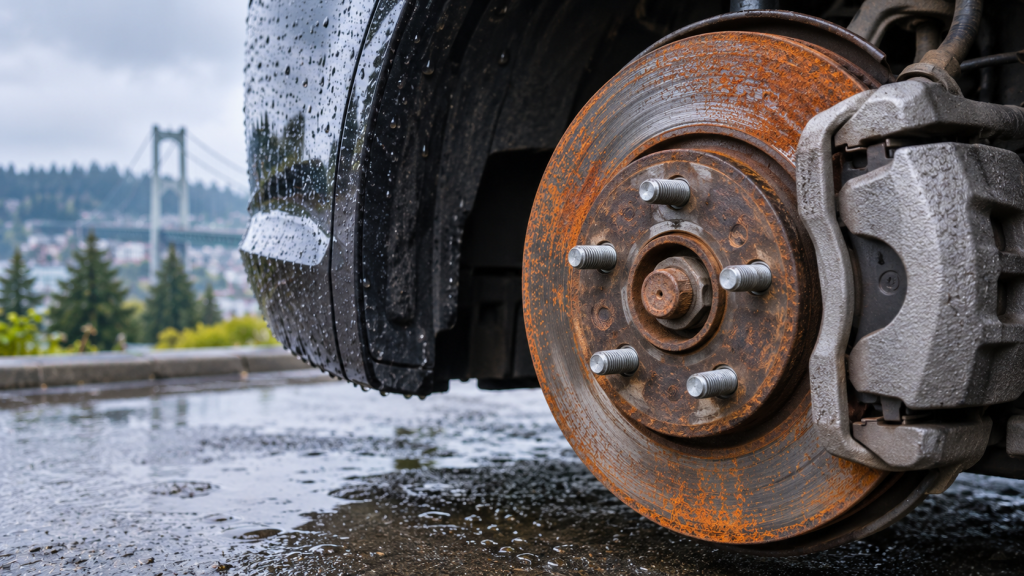
You walk out to your car after a few days of steady Tacoma rain, glance at the wheels and notice an orange brown color on the brake rotors. It looks alarming, and many drivers wonder if something is wrong. In most cases, a thin layer of rust on the rotors is normal and clears up on its own. In some cases, though, rust is a sign of a deeper problem that deserves attention. This guide explains why constant rain causes rotor rust, what is normal, what is not, how to tell the difference, which warning signs mean you should stop driving and how a mobile mechanic in Tacoma can check your brakes at home.
Why Rotors Rust So Easily
Brake rotors are made of cast iron, a material that rusts quickly when moisture touches it. Unlike most parts of the car, rotors are not painted or sealed on the surfaces that the brake pads grip. Those surfaces are bare metal, and they sit right out in the open behind the wheel. When rain, road spray, mist or heavy morning dew lands on them, a thin layer of surface rust can form in a matter of hours.
The Pacific Northwest makes this worse. Long stretches of damp weather, wet roads and humid air mean the rotors rarely get a chance to dry fully. If a car sits for a few days, the rust has time to spread across the rotor face and into the edges.
What Normal Surface Rust Looks and Feels Like
Light surface rust is usually harmless. Here is what it often looks like:
- An even orange or brown film across the rotor face and edge.
- A slight grinding or scraping noise during the first few stops after the car has been parked.
- A mild roughness for a short time that fades as the pads wipe the surface clean.
- A shiny, smooth track on the swept area of the rotor once you have driven for a bit.
When you press the brake pedal, the pads rub the rust off the contact area, and the surface becomes smooth and shiny again. The rust that remains on the inner edge and the hub area, where the pads do not touch, can stay orange and is usually cosmetic.
When Rust Becomes a Real Problem
Surface rust is one thing. Rust that damages the rotor or the rest of the braking system is another. Warning signs include:
- Noise that does not go away. Squealing, scraping or grinding that continues after the first few stops can point to a worn pad or a damaged rotor.
- Pitting. Small craters in the rotor face from rust that has eaten into the metal can reduce braking performance.
- Deep grooves or scoring. Visible lines or ridges on the rotor surface can mean the pads or debris have worn it unevenly.
- Vibration or pulsing. A shaking steering wheel or a pulsing pedal when you brake can mean the rotor surface is uneven.
- A thick rust lip on the edge. A raised ridge at the outer edge can show that the pads are not covering the full face, which can come with wear.
- Rust on the caliper or hardware. Stuck or seized parts can make a pad drag or wear unevenly.
- A pull to one side or a hot, burning smell after a drive. These can point to a brake that is not releasing properly.
- A soft or sinking pedal, or a brake warning light.
Brakes are a safety system. If you notice any of these signs, have the brakes inspected by a qualified technician before you keep driving as usual. Your owner’s manual explains what the brake warning lights mean for your vehicle.
Why Cars That Sit Have More Trouble
Cars that are driven daily tend to keep their rotors clean, because the pads wipe them every time you slow down. Cars that sit are different. If a car is parked for days or weeks in damp weather, rust builds up on the rotor faces and can bond to the pads where they touch. When you drive away, you may feel a thump, hear a grind or feel a vibration for the first few stops. Most of the time it clears. If the car sits for long periods, the rust can pit the surface, and a check is worth the time.
Is It Safe to Drive?
A thin layer of rust that wipes off in the first few stops is generally normal, and the brakes should feel firm and even. Pay attention to how the car behaves.
- Normal: brief noise after sitting, firm pedal, a smooth track on the rotors and no pulling or vibration.
- Get it checked soon: noise that continues, a slight pulse in the pedal, visible pitting or grooves or an uneven look between the left and right wheels.
- Stop driving and get help: a soft pedal, a pedal that sinks to the floor, a brake warning light, a strong burning smell, smoke from a wheel or a car that pulls hard to one side.
How to Reduce Rotor Rust
- Drive the car regularly. Even a short drive with a few gentle stops helps wipe the rotors.
- Do a few gentle stops after you leave the car sitting, before you rely on the brakes in traffic.
- Park under cover when possible, in a garage or carport, to limit exposure to rain.
- Wash the wheels and brakes when you wash the car, and let them dry with a short drive afterward.
- Avoid long storage in wet conditions. If you will not drive a vehicle for a while, ask a technician about the best way to prepare it.
- Keep up with brake service. Rust is easier to deal with when the pads, rotors and hardware are in good shape.
Rain Affects More Than the Rotors
Wet weather in Tacoma is hard on several parts of a car. Visibility is one of the biggest concerns, and worn wiper blades can leave streaks or miss patches of glass at just the wrong moment. Our guide on how to replace wiper blades walks through a quick job that makes a big difference during rainy months. Tires, lights and the battery also work harder when it is dark, wet and cold. A car that will not start on a damp morning is a different problem from rusty brakes, but our guide to the top 10 reasons your car won’t start can help you work through it.
Do Not Ignore the Basics
- Listen. Brake noises are the car telling you something.
- Feel. Pay attention to pedal feel, vibration and pulling.
- Look. Check the rotors through the wheel spokes when you wash the car.
- Do not wait. Small brake problems tend to get bigger, and a quick inspection is easier than a repair that has gone on too long.
How a Mobile Mechanic Can Help
A mobile mechanic can come to your home or workplace in Tacoma and look at your brakes where the car is parked. A technician can take the wheels off, look at the rotors, pads, calipers and hardware and tell you whether you are seeing normal surface rust or something that needs attention. Many brake jobs, such as replacing pads, can be done on site. Some work, such as machining rotors or certain repairs that need a lathe, lift or specialized equipment, may need a shop, and a good technician will tell you honestly which situation applies. If you have been hearing noise, feeling vibration or noticing rust that does not go away, a quick inspection can give you an answer.
Quick Summary
- Rotors are bare cast iron, so they rust quickly in damp weather.
- Light surface rust usually wipes off in the first few stops and is normal.
- Persistent noise, pitting, deep grooves, vibration, pulling or a soft pedal are not normal.
- Driving regularly and parking under cover helps keep rust down.
- If your brake pedal feels wrong or a warning light comes on, stop driving and get help.
- A mobile brake inspection can tell you whether the rust is harmless.
If you are worried about what you see on your rotors, we can take a look. Visit the Mobile Mechanic Pros of Tacoma homepage to learn more, or contact us to schedule a brake inspection.